
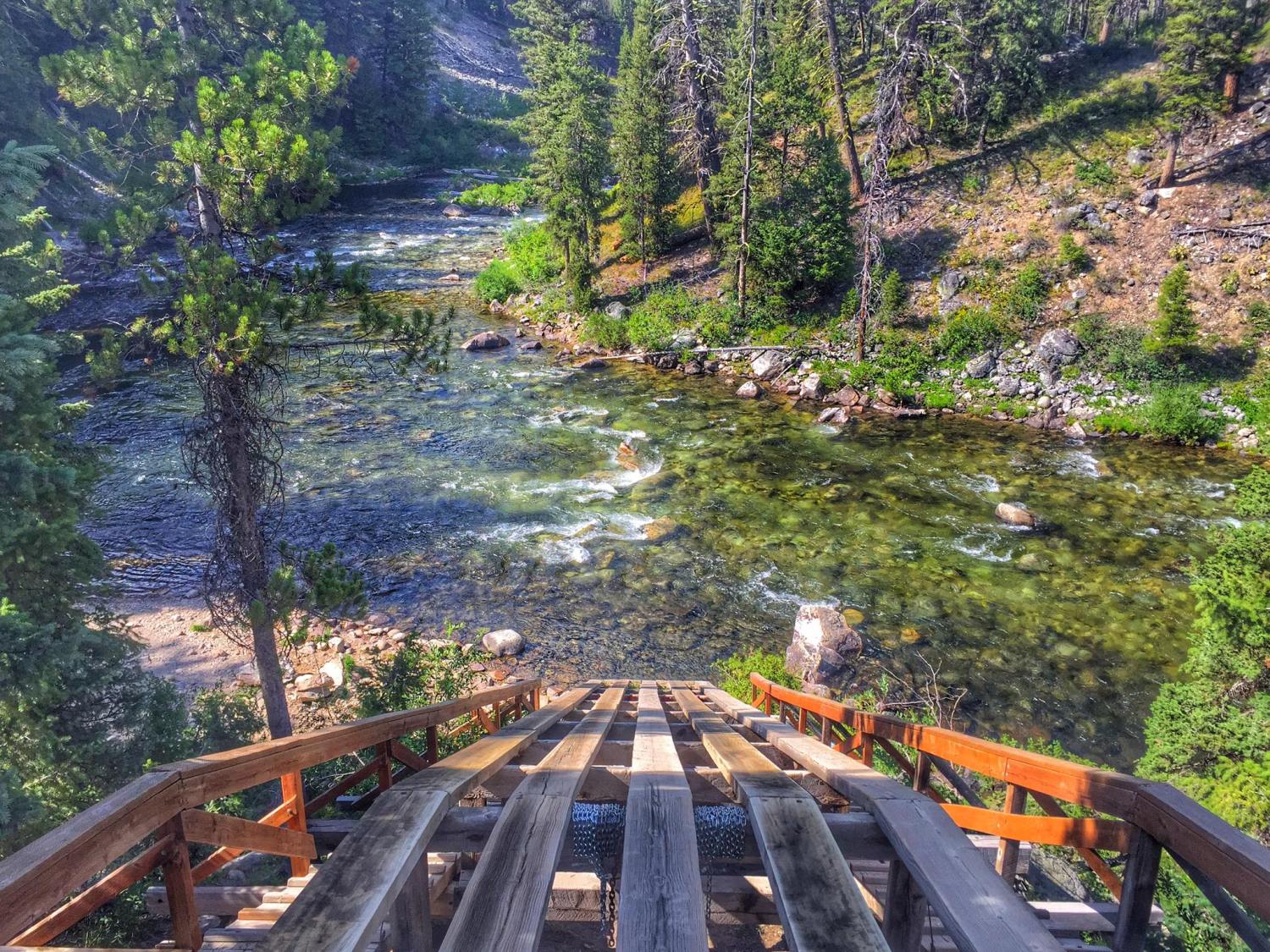
A young man from east of the Mississippi, the largest river in the United States, travels west to experience the Wild & Scenic Rogue River in Oregon.

Sawyer Stories – Tales of Oar locks, Eddies, and The Feel Of Water
We make the world's best paddles and oars for SUP, kayaks, white water rafting, and canoes.
A young man from east of the Mississippi, the largest river in the United States, travels west to experience the Wild & Scenic Rogue River in Oregon.
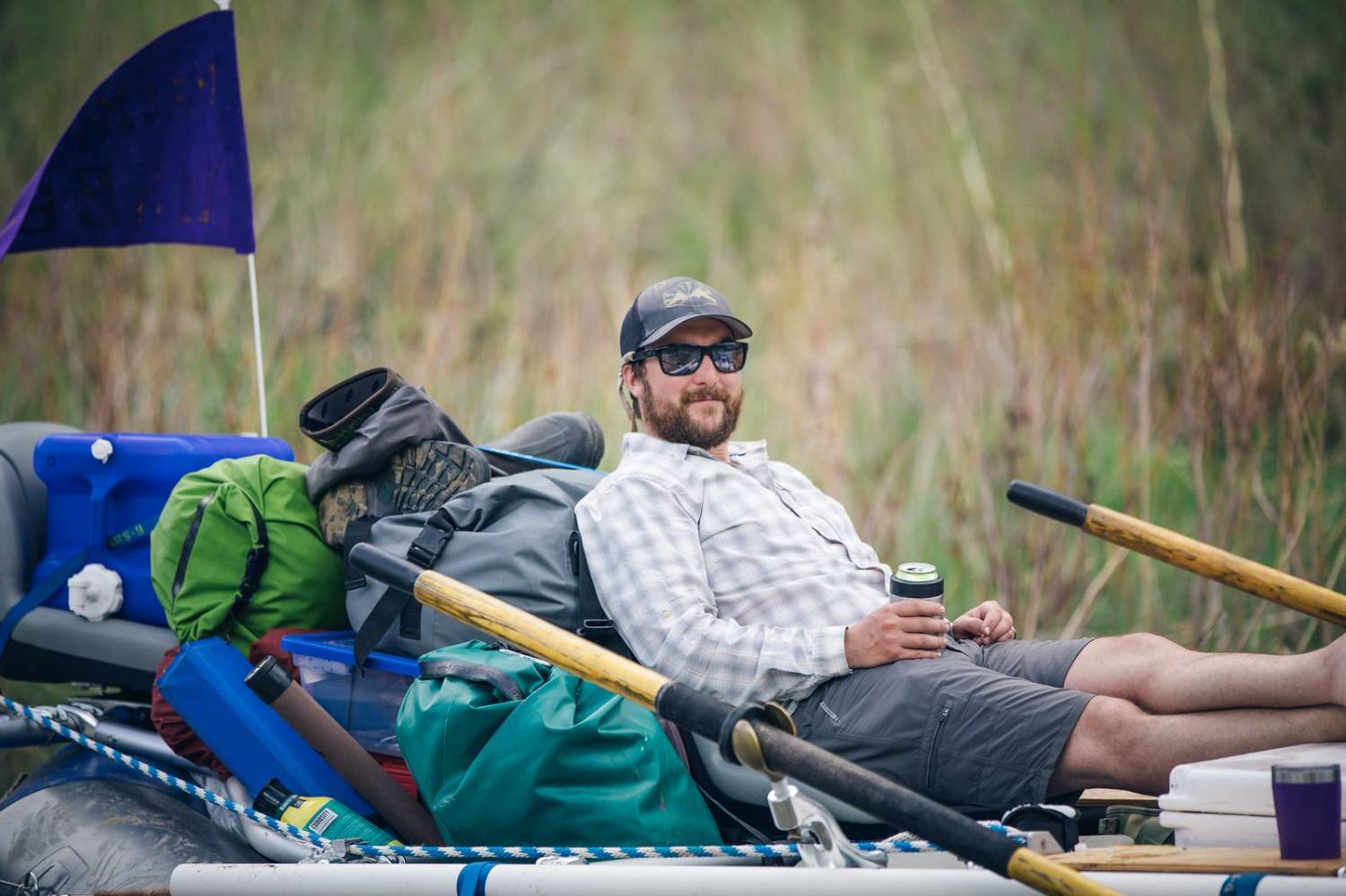
It’s common to find professionals in the outdoor industry at the forefront of design and performance, leading the use of new technologies and materials and adapting their tools to the job at hand. Sawyer is no different, and continuous feedback from professional guides, outfitters, and athletes drives our innovation. With a racing history (see Part 1 in the series) that influenced design, handcrafting wood oars out of raw materials like Ash, Cedar, and Douglas Fir, and composite oars and blades (fiberglass and carbon fiber) for fishing guides and anglers took a different approach to the centuries old task; controlling a boat on a body of water safely, and back home again. Today, an oarsman might make 1000 oar strokes per mile. After 10 years of guiding anglers myself, and with many sets of oars, today’s Sawyer lightweight and high-performance products are perfect for professionals and recreational users.
When we design oars and oar blades for anglers, the end result isn’t always a finished product that fits the traditional profile. As you read before, the Shoal Cut blade was designed with shallow-water applications in mind. I liken it to the differences between a spoon and a knife. Buttering a slice of warm sourdough right of the toaster? A knife with a long, thin blade for an even application. A bowl of oatmeal for breakfast along with it? A spoon, of course (yes, we’ll even talk about the beloved Spork in future posts!).
Brian Wheeler, a professional fly fishing guide in Montana, has two sets of Sawyer oars for different boats and purposes. At around 80 days a season guiding and another 40 or so floating with his wife and their dogs, they spend most of their time on the Big Hole, Beaverhead, Madison, and Smith rivers. Here’s his take.
“In my 13’ Aire Tributary I row the classic Smoker DyneLite in a 9’ length with the narrow blade and have abused these oars for the past 7 years. I am in love with them. The lightweight, smooth flexing construction with the bomb-proof blade are simply perfect. I personally love both the flex and pop you get from wood. In fast-paced pocket water, you have to be able to dip in behind and around rocks to make corrective and speed-stabilizing micro-strokes. It’s simply second nature with these oars. The “pop” of wood allows for maximum efficiency of your stroke in those tight spots where trout live, if your anglers can hit the spots!”
“In my Clackacraft Eddy, I upped the size of my oars to using 9’3” SquareTop Dyno X, also with the narrow blade. The Eddy is a wide boat. Adding 3” to each oar, though adding some weight, was definitely a benefit. My hands stay closer and my rowing stroke stays in the power zone, instead of reaching farther apart and putting stress on my already stressed out shoulders. Though 9.5 footers would be great as well, for me, the 9’3” is the perfect balance of extra length, swing-weight, and functionality. The Dyno X wrap stiffens up the wood oar to a noticeable degree, though it still beats the complete lack of feel in fully composite oars. The stiffer flex helps me get moving when the water gets pushy.”
Brian is clearly a toast-is-best-buttered kind of guide. Until next time, when we’ll hear from a member of our speciality shop team, on why they choose Sawyer for their customers. Eddy Out!
After a legendary canoe racing career, which includes being a 10 time AuSable River Canoe Marathon Champion (and recently being inducted into the Canoe Racing Hall of Fame), Ralph Sawyer began building paddles and oars. In 1967, he established Sawyer Paddles and Oars in the small town of Rogue River, Oregon, where he quickly fell in love with whitewater rafting and began producing whitewater oars. Sawyer oars were soon found in the hands of river outfitters all over North America with a reputation for quality, performance, value and beauty. Ralph drove the use of Douglas fir, for its high strength to weight ration and flex in combination with Ponderosa Pine and Sawyer’s signature Walnut racing stripes. His use of these woods in combination with fiberglass popularized the concept of composite paddles. Ralph is now retired and enjoys exploring the Puget Sound and Alaskan waterways from his home, an ocean faring catamaran, with his wife Roberta (a.k.a. Bobbie).
Bruce Bergstrom took the helm in 1987 and propelled the company’s innovation and reputation of durability. Most noted was the introduction of the Sawyer SquareTop Oar matched with another of his innovations, the Cobra Oar Lock. This combination is a favorite among drift boat fisherman and whitewater rafters, which may row a thousand strokes per mile positioning for the perfect cast or negotiating heavy whitewater. The two innovations paired together make for the highest performing whitewater oar and oarlock system in the world. Bruce also acquired chief rival Smoker Oars & Paddles in 1992. The acquisition set up Sawyer to be the premier paddle & oar maker in the USA, complete with a durable line of composite oars balanced by a line of legendary solid ash wood oars for extreme conditions. Bruce was recently awarded a lifetime achievement award by the American Outdoors Association for his contributions to our industry.
Link Jackson, owner of Streamtech Boats, was one of the first to row with a set of SquareTops. Well, his wife Becky also was. “My first experience with Sawyer Square Top oars came years ago when Bruce Bergstrom sent me one of the first pairs of them made to row around and give him feedback on them. I took them on an early spring trip camping and floating on the Green River below Flaming Gorge Dam. It was a cold day with rain, sleet, snow, wind and all the miseries that come with it. Becky chose to row first and so she was the first to test the new SquareTops. After our customary half-hour or so I asked her to change up and let her fish for a while as I rowed. She said No. So I waited a while longer and asked to row. She said, “No”. So, I asked how those new oars were working? She said, “Shut up and fish”. A while later I said, “Come on, tell me how they feel”. She looked me square in the eye and said, “You can pry these from my cold dead fingers.” And so, I learned that SquareTops are the finest oars we have ever used.”
A few years later after the Shoal Cut blades were developed, I finally decided it was time to give them a try. We took a set of them on an 8 day trip down the Middle Fork of the Salmon on a low water September trip. We decided to take only Shoal Cut Square Tops along to force the issue of testing them well. It was immediately apparent upon entering “Door #2” on the very first technical spot that shoal cut blades would be an advantage. The entry to this drop is very shallow and the blades provided great purchase on the shallow water. More importantly, the rounded shape was glancing off rocks nicely rather than pitoning and grabbing as I was accustomed to. After running them in larger rapids feathering the blades on lateral waves, I found the shape to be excellent for fine feather on big waves. On one occasion I managed to jam an oar and pop it out of the oarlock. That is when I learned that SquareTop oars float very high and do not sink like hollow oars can. We easily retrieved the lost oar a short distance downstream floating high in an eddy. We have not rowed anything else since that day. The Shoal Cut Square Top Artisan Series oars are now standard equipment on all Streamtech Boats packages.
We’ll talk to Guides, Outfitters, and Specialty shop owners about their oar and blade preferences, what and where they work and row, and their experience with Sawyer products. Eddy Out!
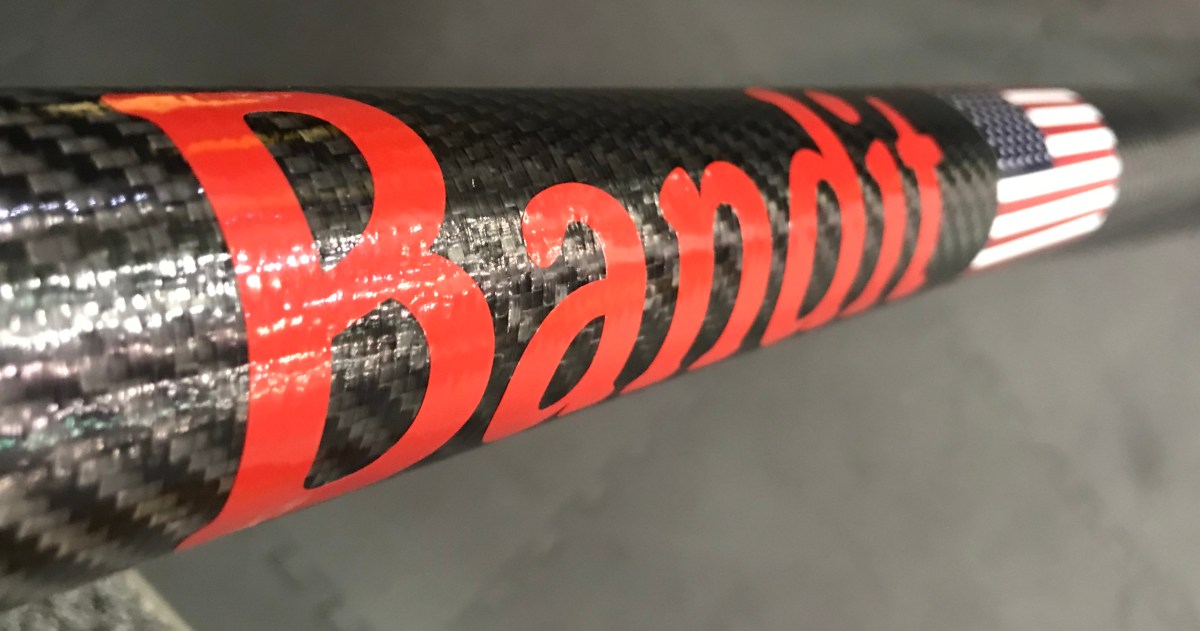 Smoker Oars have been 100% Made in USA since 1921. Over the years, Smoker Oars has made the toughest oars on the planet from solid Northern White Ash. Smoker Oars were part of the US Marine Corp and Navy Seal secret missions leading to the success of World War II. Smoker Oars were the first oars down the Grand Canyon. Here at Smoker Oars, we’re proud to launch the lightest weight yet incredibly durable Smoker Bandit series for modern day combat fishing in high performance drift boats.
The Smoker Bandit and Smoker Bandit Shoal continue the legacy of the highest quality, rugged and now lightweight professional grade oars for our global network of professional fishing guides. Our professional anglers row over 1,000 strokers per river mile sweeping the river for the perfect catch. The proprietary blend of carbon twill reinforced with tough fiberglass make for the perfect flex and feel on every stroke.
The Smoker Bandit blades are handcrafted with the toughest materials known to whitewater.
Lengths are available from 8″ up to 10’ at 6″ increments.
For the longest life and best performance, we recommend packaging these beauties with the legendary Cobra Oar Locks. The Cobra Oar locks give the highest range of motion while protecting the shaft in extreme conditions.
For more information or to order your own set, contact Team Sawyer below via email, or call (541) 535-3606
zac@paddlesandoars.com
aaron@paddlesandoars.com
derek@paddlesandoars.com


23 stitches. That’s how many were needed to patch-up one of our oarsman/solo boat trip members before we even left the launch, and coincidentally the same years of marriage my wife and I were celebrating. He slipped getting out of his truck and onto the trailer his left shin went, kicking in our WFA plan. We evacuated him to Craig’s ER with the help of the NPS Ranger. These are the reasons why you train, prepare, and punt when needed. So we punted.


Well past 10 am, our launch finally went at 4:30 pm after a terrible night of mosquitos. Yes, a full-body net would have been a great idea. The sand and cart system (take some WD40 for the rollers) was better than hauling rafts and gear, but not the easiest. Great experiences like these take some hardships, however. First night at Wade & Curtis turned out to be a prescient decision. A wonderful evening and opportunity to regroup and talk about the next day – a big travel and rapid day down to Rippling Brook II.
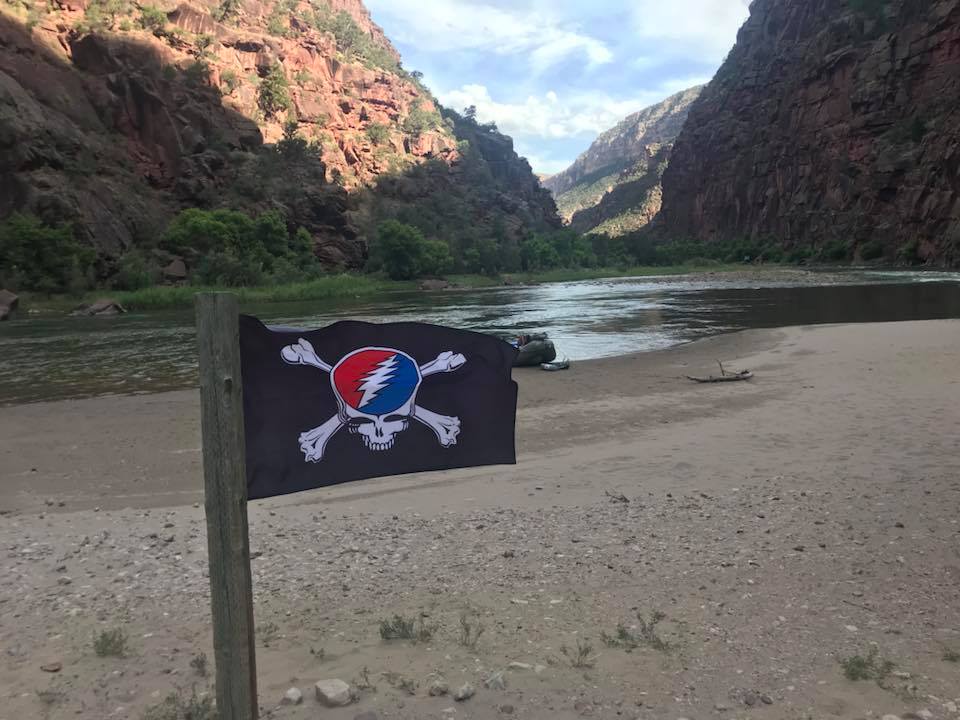
We read and ran everything but scouted Hell’s Half Mile, and at 2000 +/- cfs the river pretty much pushed me right and away from Lucifer but close enough to earn it’s rating. We camped at RBII knowing that we had some play time and a beautiful spot to SUP, enjoy a casual morning, and push towards Limestone. Not the camp I chose but that’s how it ended up. At 10:45, a commercial trip pulled into the RBII and announced “This is our site tonight” and immediately began off-loading and setting up tables. One of the guides moved towards our groover spot when I asked them to wait as we had until noon. It was not what we expected and the commercial trip clients were just as surprised. The Outfitter has already responded to my request to provide feedback. The right thing to do would have been to pull in downstream, leave your unpacking until we left, and graciously share this beautiful canyon.
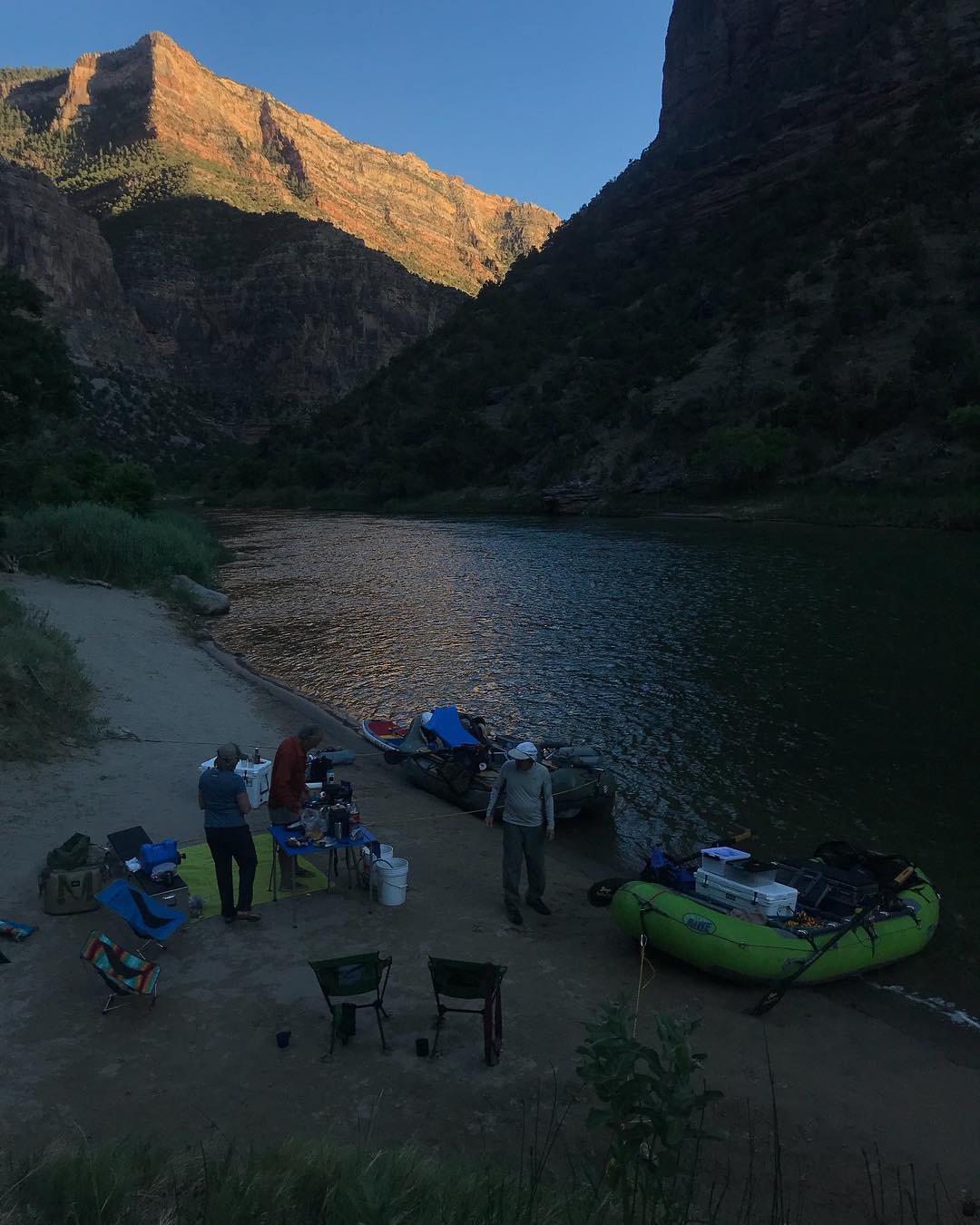
Limestone was a decent camp, but it gave us a long day to Island Park in the direct sun but fun read and run rapids all along the way. A Red Fox burgled a bag of peanuts left out at night, and we spotted the beginning of the Dollar Ridge fire directly to the west. We used the refuse containers at Rainbow Park and met some day users there. Thank you to the NPS for providing and taking care of our public lands. The Takeout at Split Mountain came with great SUP opportunities.

Great wildlife viewing along with an overall great trip – Mule Deer, Bighorn Sheep, a Moose above Rainbow Park, raptors, beaver, and of course mosquitos but the launch at Gates was the worst. FYI no fires or fire pans allowed, complete ban. Propane fuel only.
If you have the opportunity, this is a river trip and experience you want in your bucket list.
 Sawyer Stories - Tales of Oar locks, Eddies, and The Feel Of Water